Back to Products
Procedural Vines
Surface-following vines and roots with reusable presets, material wind, varied foliage, growth playback and character climbing.
AI-polished presentation of the original Unreal feature stations and Overgrown Sanctuary captures. Product shapes and native editor controls are preserved. Open an image for a closer look.
Gallery
1 / 17
About This Product
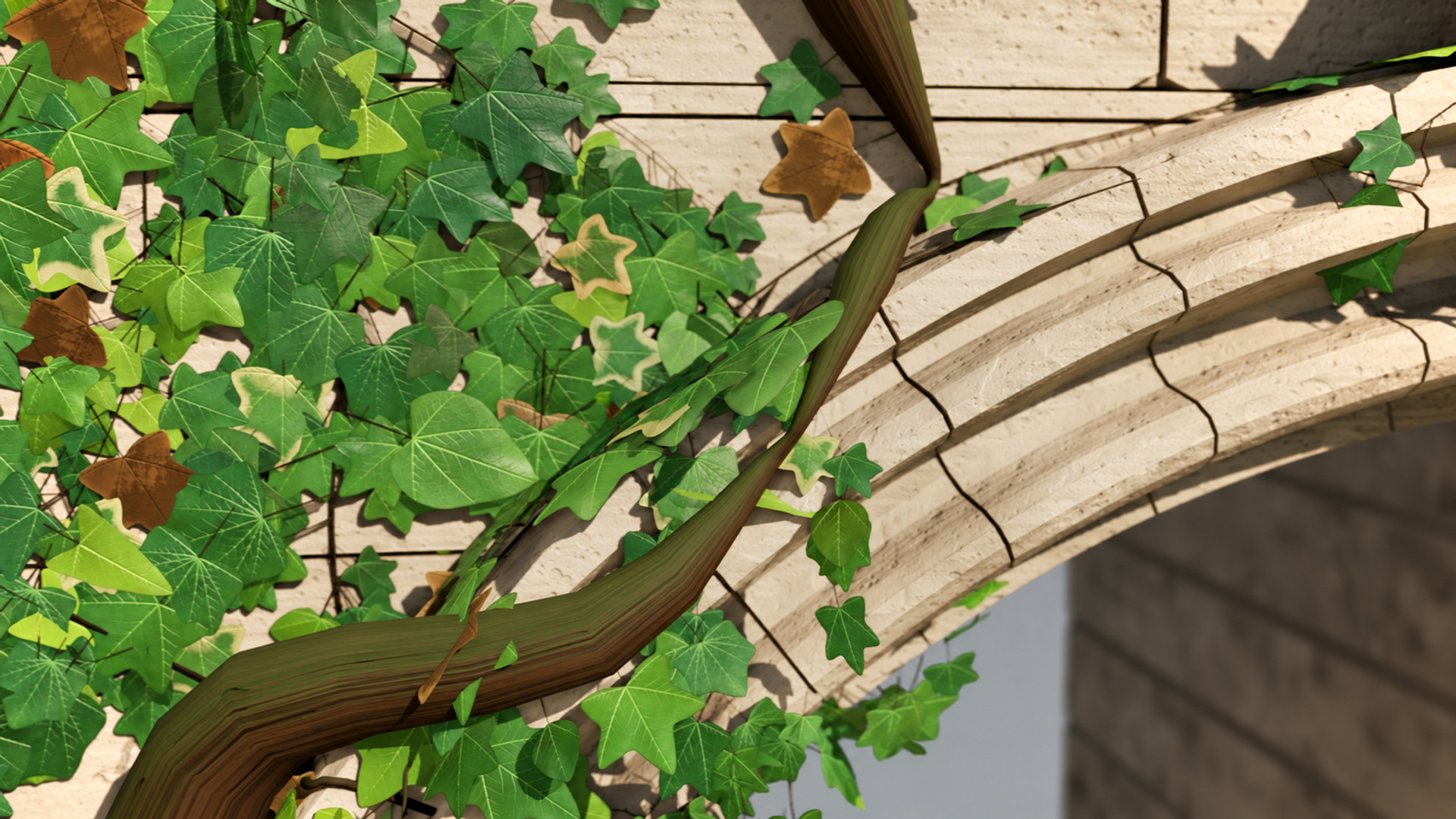
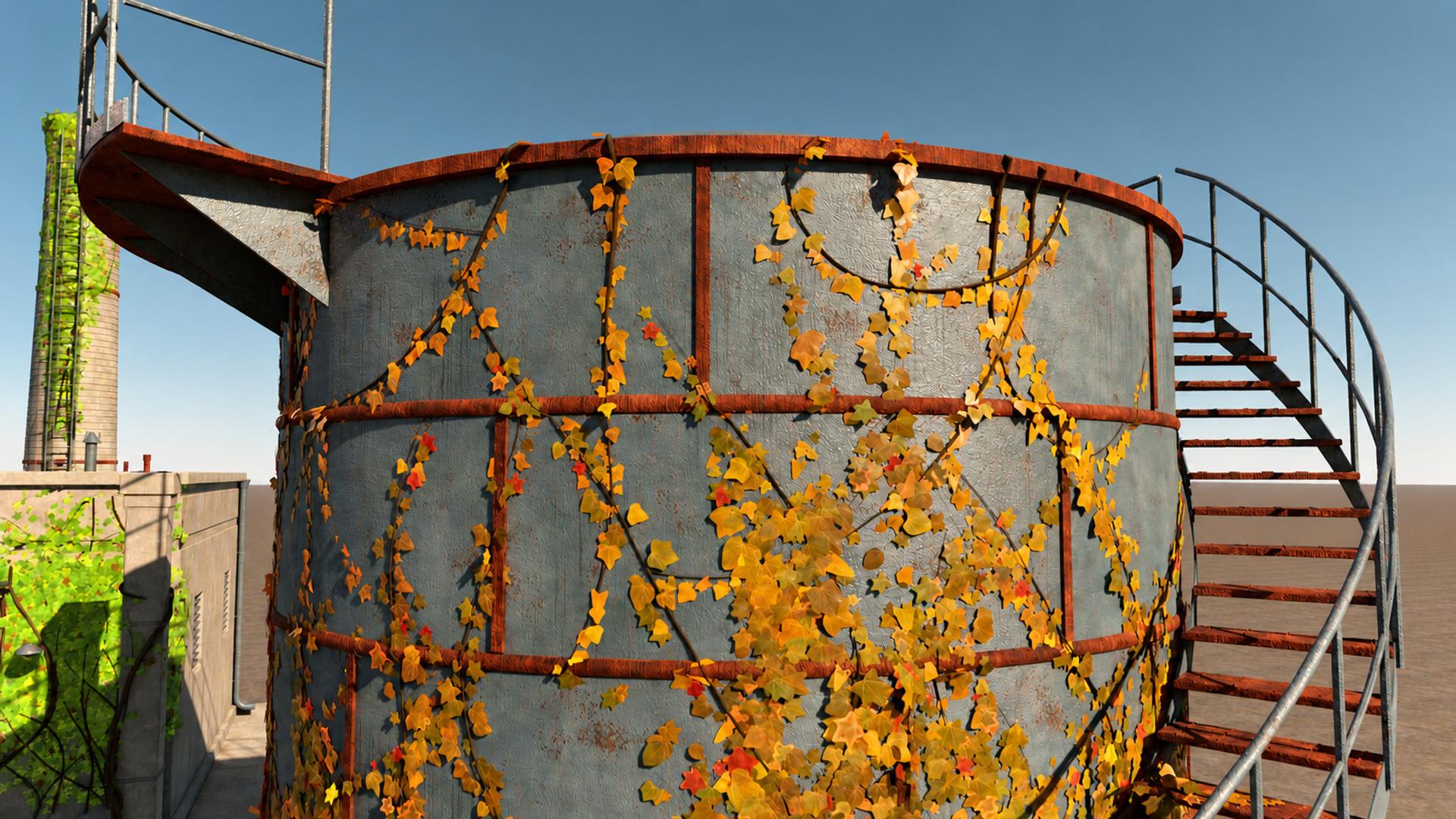
Procedural Vines creates branching vine geometry beside collision surfaces. Start with the default wall mode, or enable Allow Horizontal Surfaces for floors, spheres, ramps and supported transitions between connected meshes. Choose a seed and tune branching, taper, smoothing, root flare and foliage. World-space exclusion boxes keep architectural openings clear. In the opt-in surface mode, one strand can continue across supported seams between separate collision meshes. Set an initial local growth direction and tune the step distance to the geometry. The route needs nearby collision support; it does not bridge unsupported air gaps or follow moving geometry automatically. Save a Vine Settings Preset to reuse growth settings and optional materials. Keep the current actor seed or explicitly override it. Tune Stem Twist and Leaf Size Variation in Details. The supplied wind materials animate leaves; generated stems stay rigid and the surface route is unchanged. Use procedural leaf quads, one instanced static mesh or a collection of leaf variations. Rebuild in the editor or request regeneration from Blueprint, then check completion and measured generation timings. Reveal or retract generated paths with growth progress, forward/reverse playback, pause and speed controls. Leaves keep their deterministic placements as the cached geometry is revealed. Disable foliage and tune radius, taper and root flare for thick root and tentacle-shaped stems. The separate Vine Climb Component gives a Character collision-based vertical and lateral traversal, release, jump-off and a top-edge mantle attempt. Connect your own inputs and animation logic. The component can climb any compatible blocking geometry, including the supporting walls. Explore the separate Overgrown Sanctuary example environment, with original stone architecture, ivy meshes and materials. Walk its terraces and stairs, try growth playback on the selected pier ivy, and inspect the editable camera sequence. Growth playback reveals cached geometry; it does not simulate biological growth or skeletal tentacle deformation. Material wind is a separate visual effect. Character animation, IK and network replication are not included.
Features
Select image to view full size.
Follow curved surfaces
Use default wall growth or opt into floor and sphere supports. Carry the path between sampled surface normals, then build branching coverage with seeded variation.
Learn More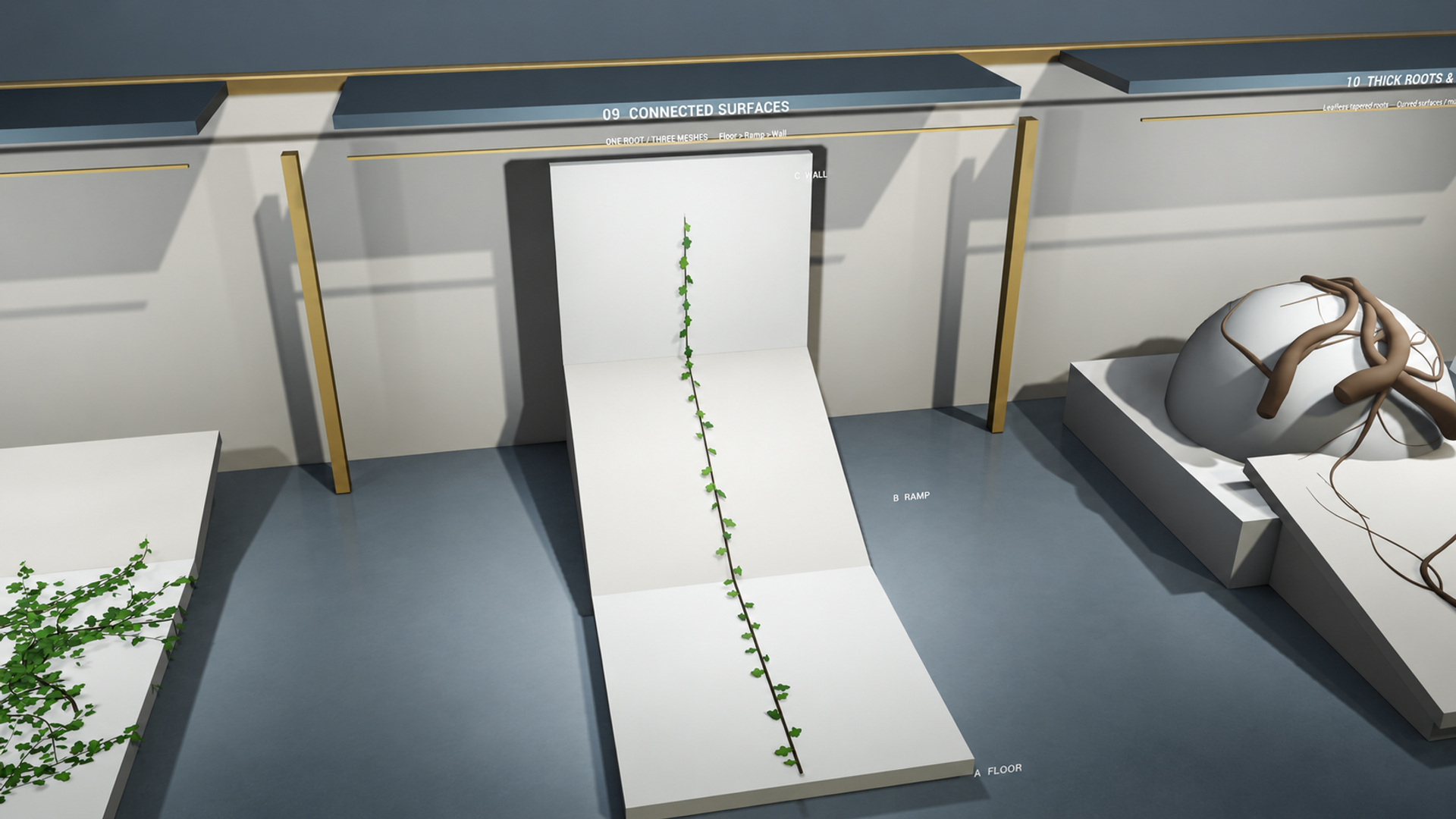
Select image to view full size.
Cross floors and connected meshes
Guide one strand across touching floor, ramp and wall components. Tune step distance and collision support at each seam; the path needs a supported route.
Learn More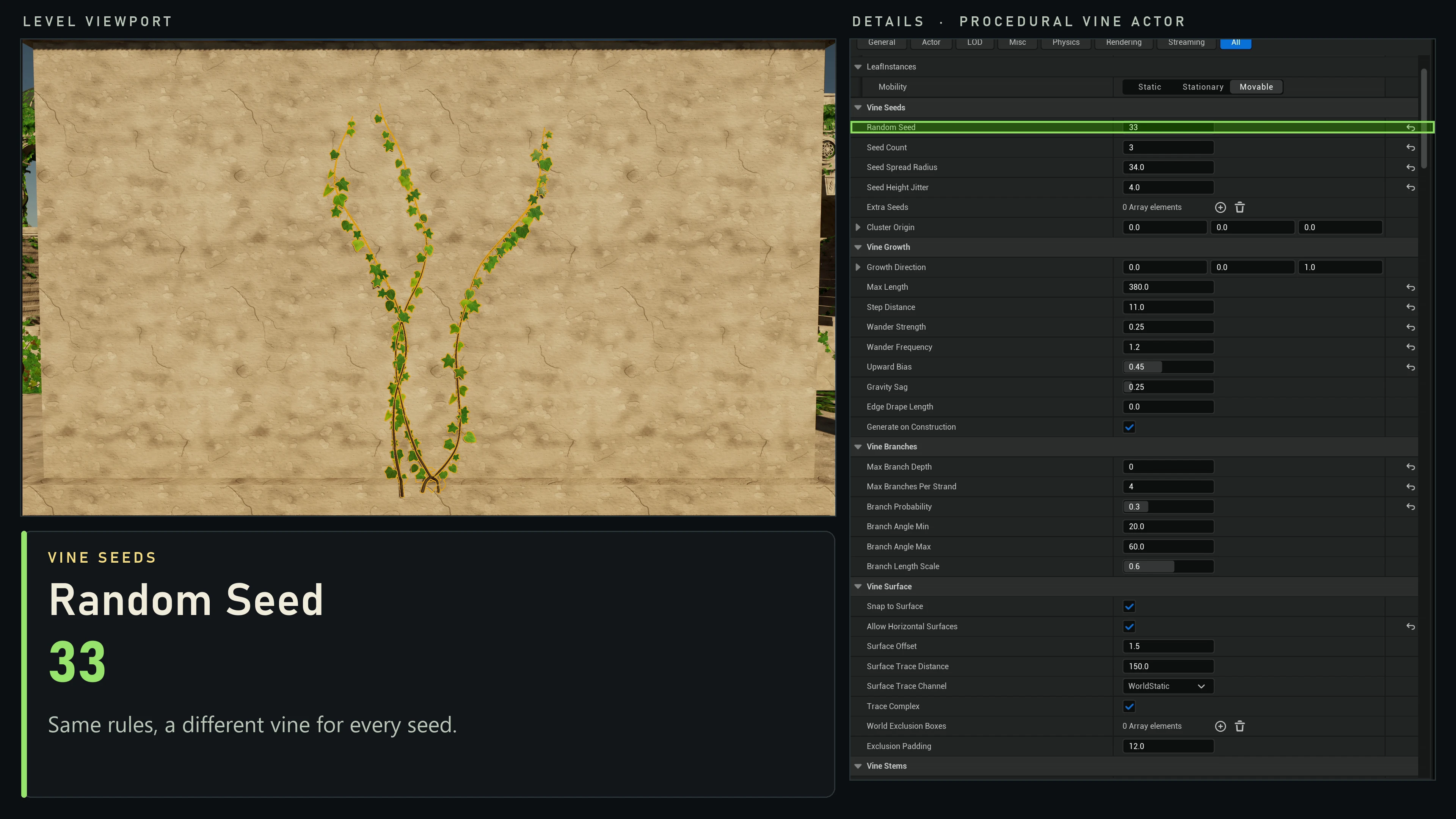
Select image to view full size.
Reuse settings and add wind
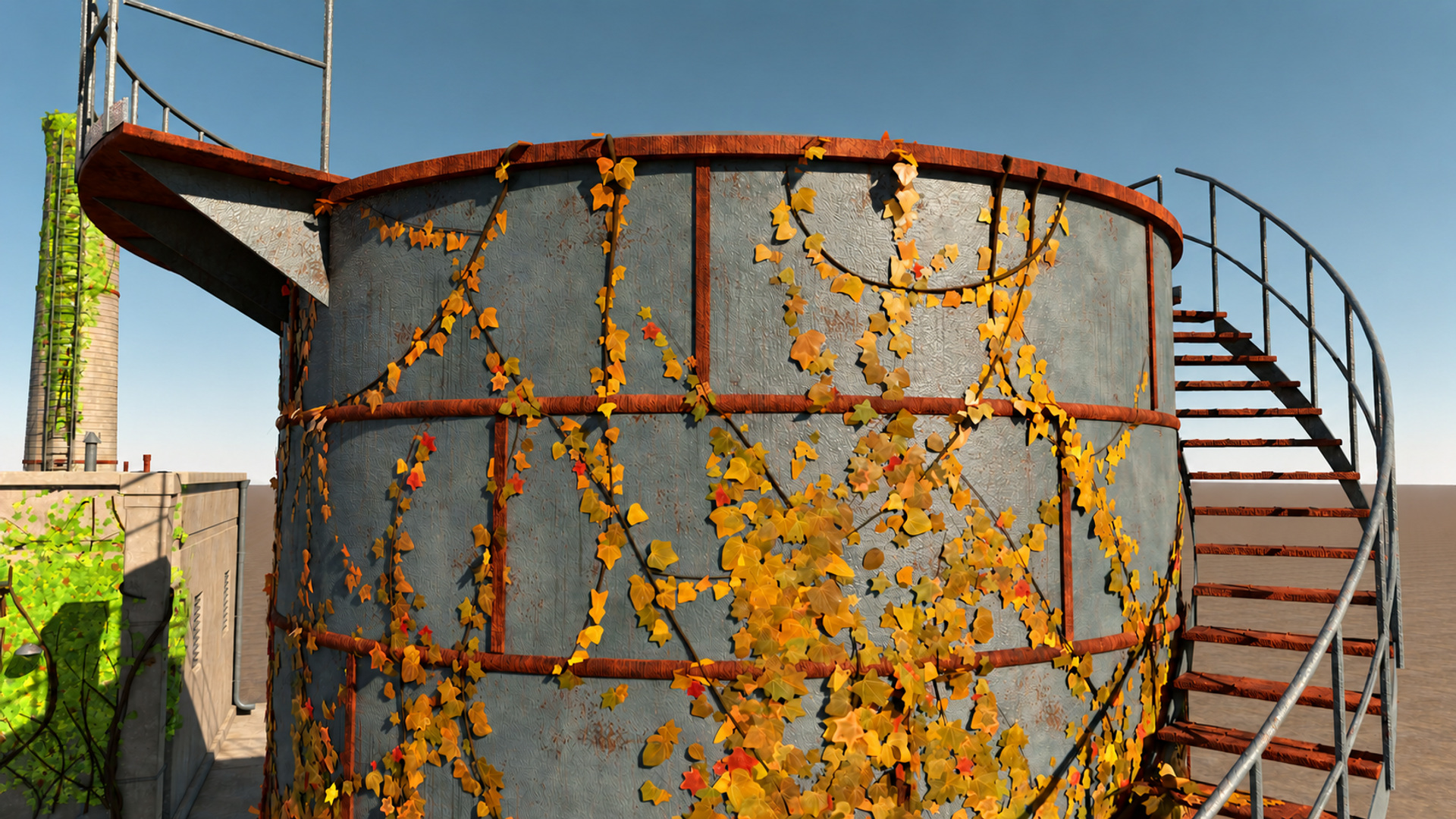
Save a Vine Settings Preset, choose whether to override the seed, and reuse materials and foliage. Wind controls drive compatible materials without changing the generated route.
Learn More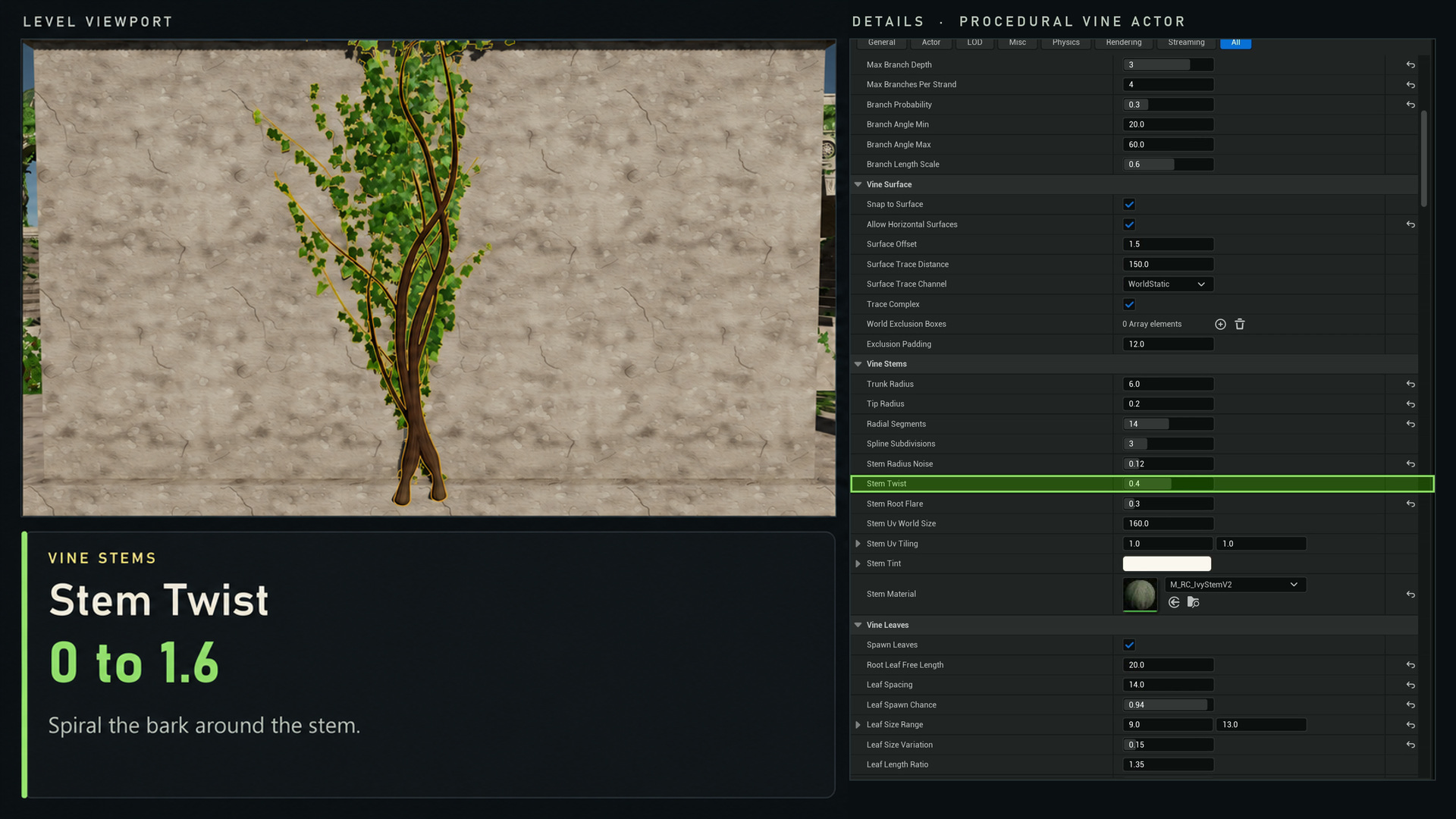
Select image to view full size.
Shape vines and thick roots
Tune branches, taper, smoothing, radius variation and root flare. Disable leaves for thick root or tentacle-shaped stems; tight bends can narrow the local tube radius.
Learn More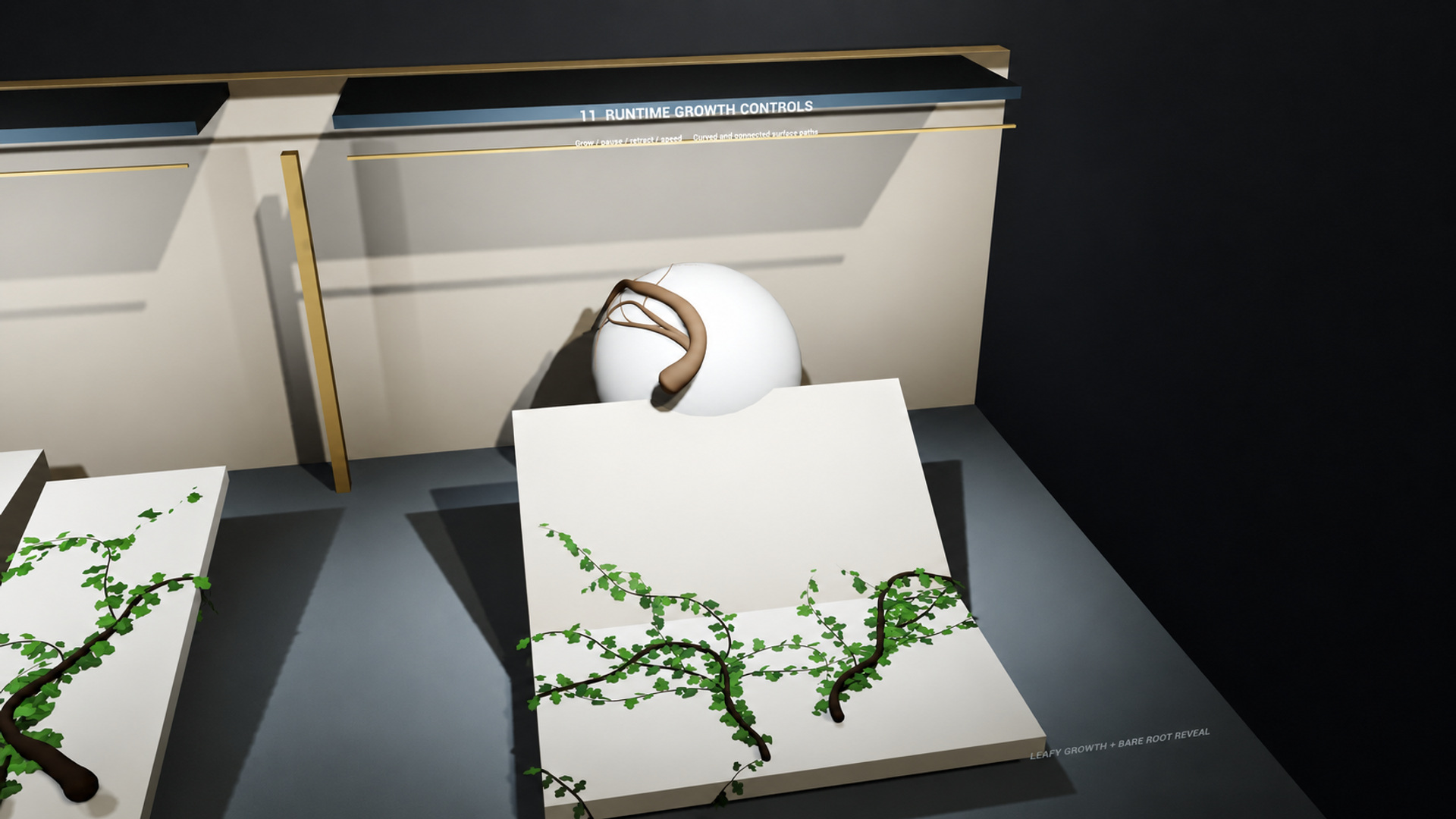
Select image to view full size.
Play, pause and reverse growth
Reveal or retract cached generated paths from Blueprint, change playback speed and inspect applied progress. Branches appear after their parent attachment; leaf choices stay stable along the same route.
Learn More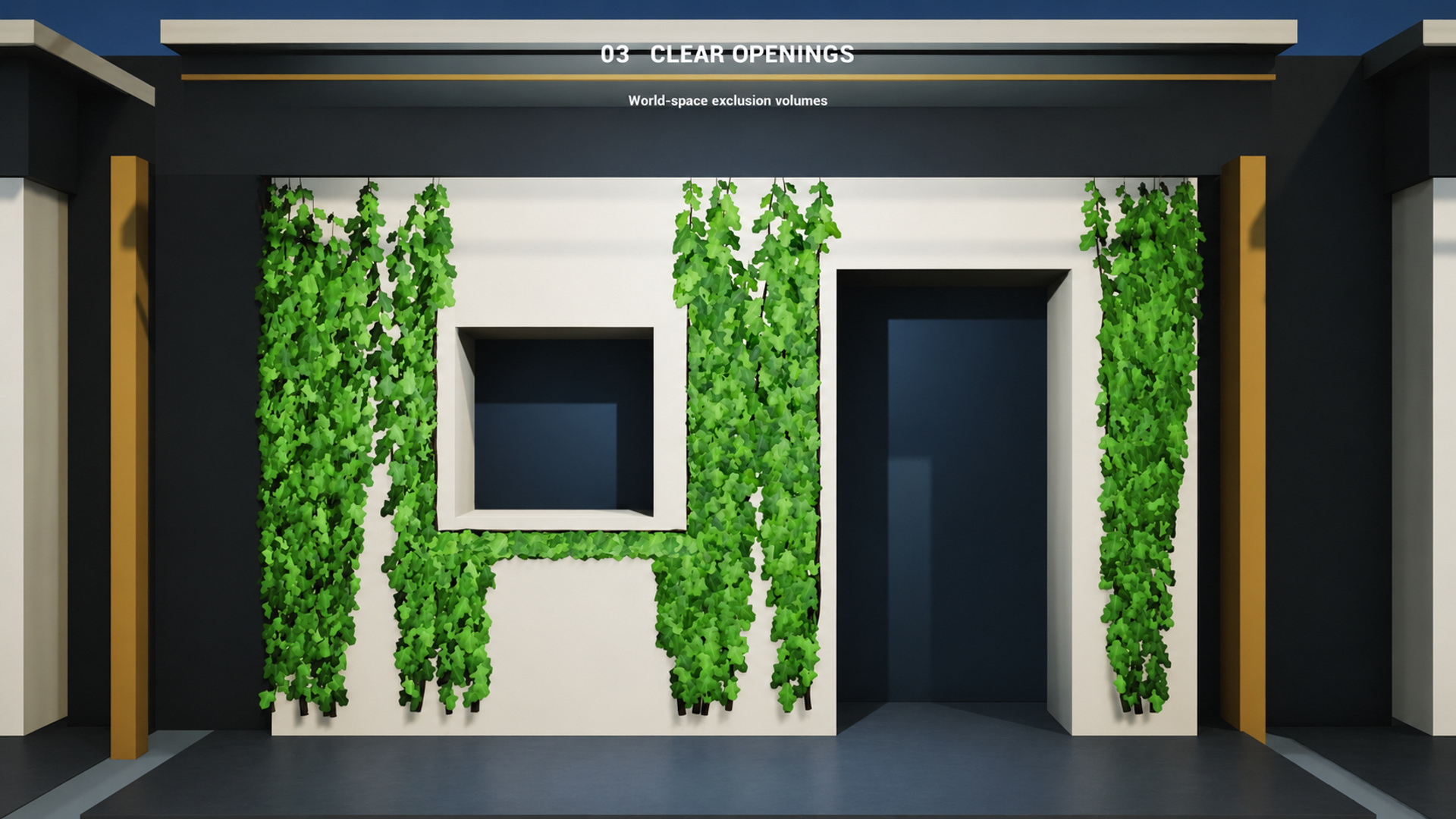
Select image to view full size.
Keep openings clear
Reserve doors and windows with world-space exclusion boxes. Stem paths avoid these regions and overlapping leaf bounds are omitted.
Learn More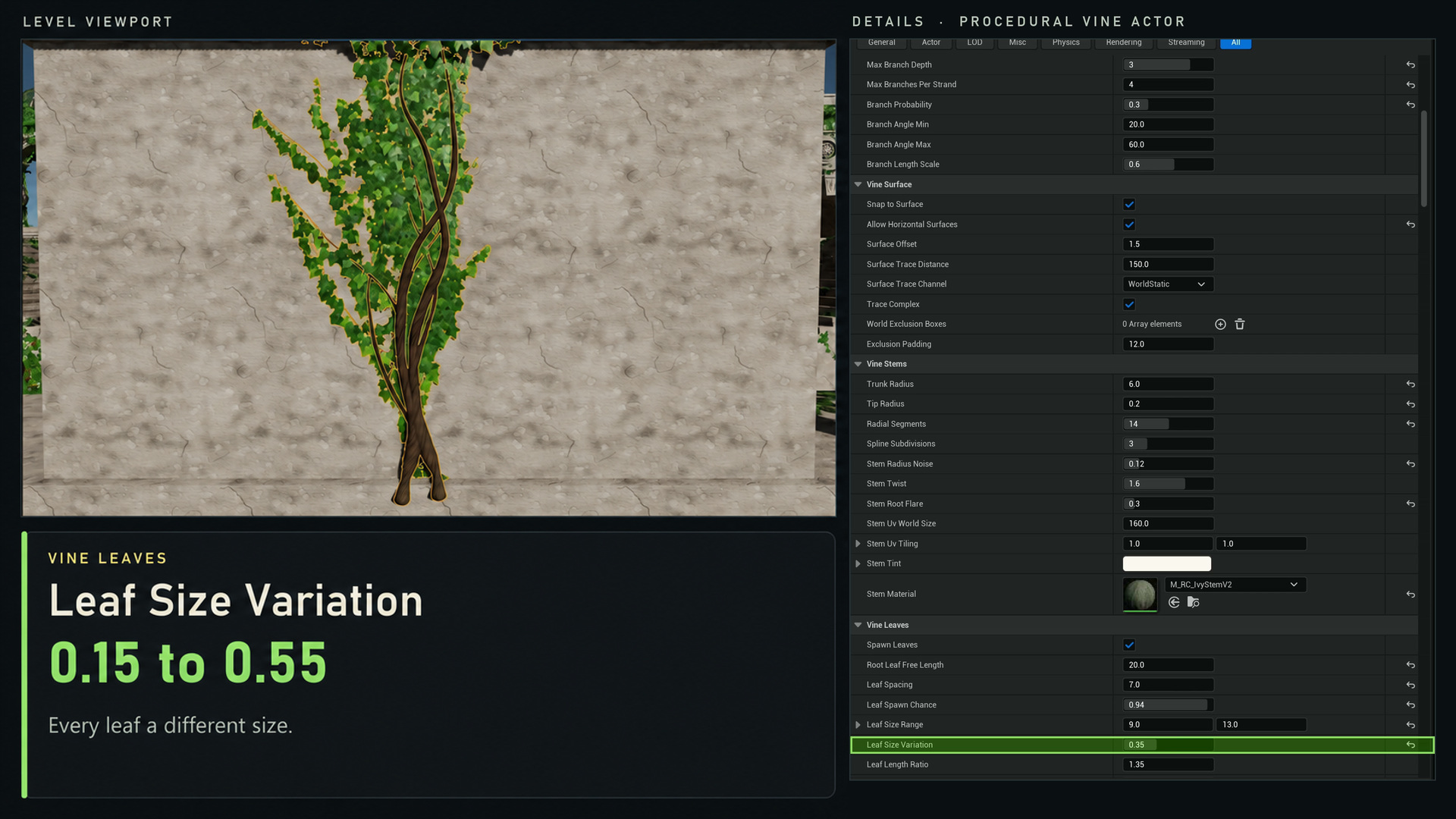
Select image to view full size.
Choose your foliage
Switch between procedural quads, a single instanced leaf mesh and randomized mesh variations. Control spacing, density and the size settings for each rendering path.
Learn More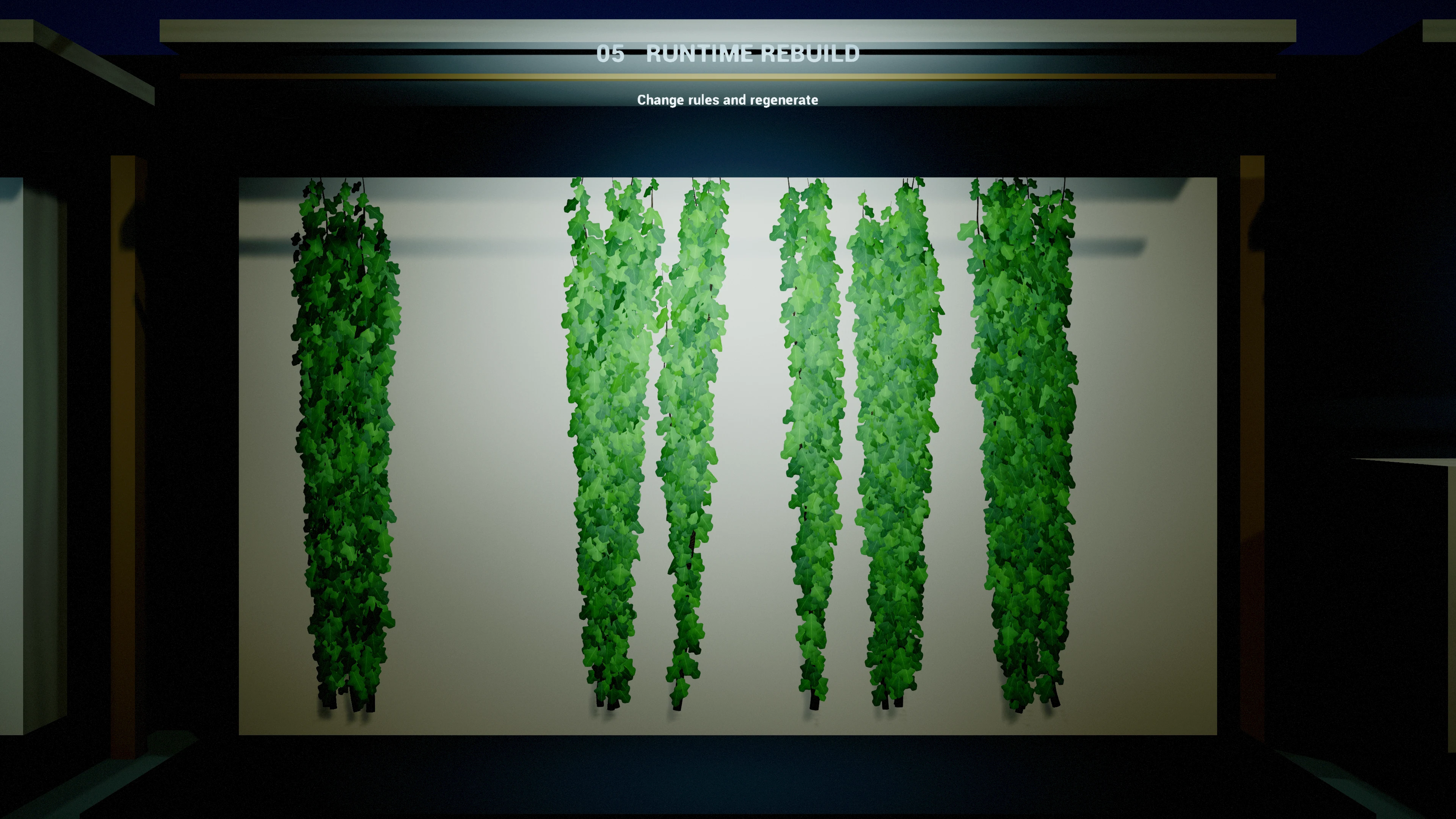
Select image to view full size.
Regenerate during play
Request asynchronous rebuilds from Blueprint, check Is Generating, and read strand counts and generation timings after completion.
Learn More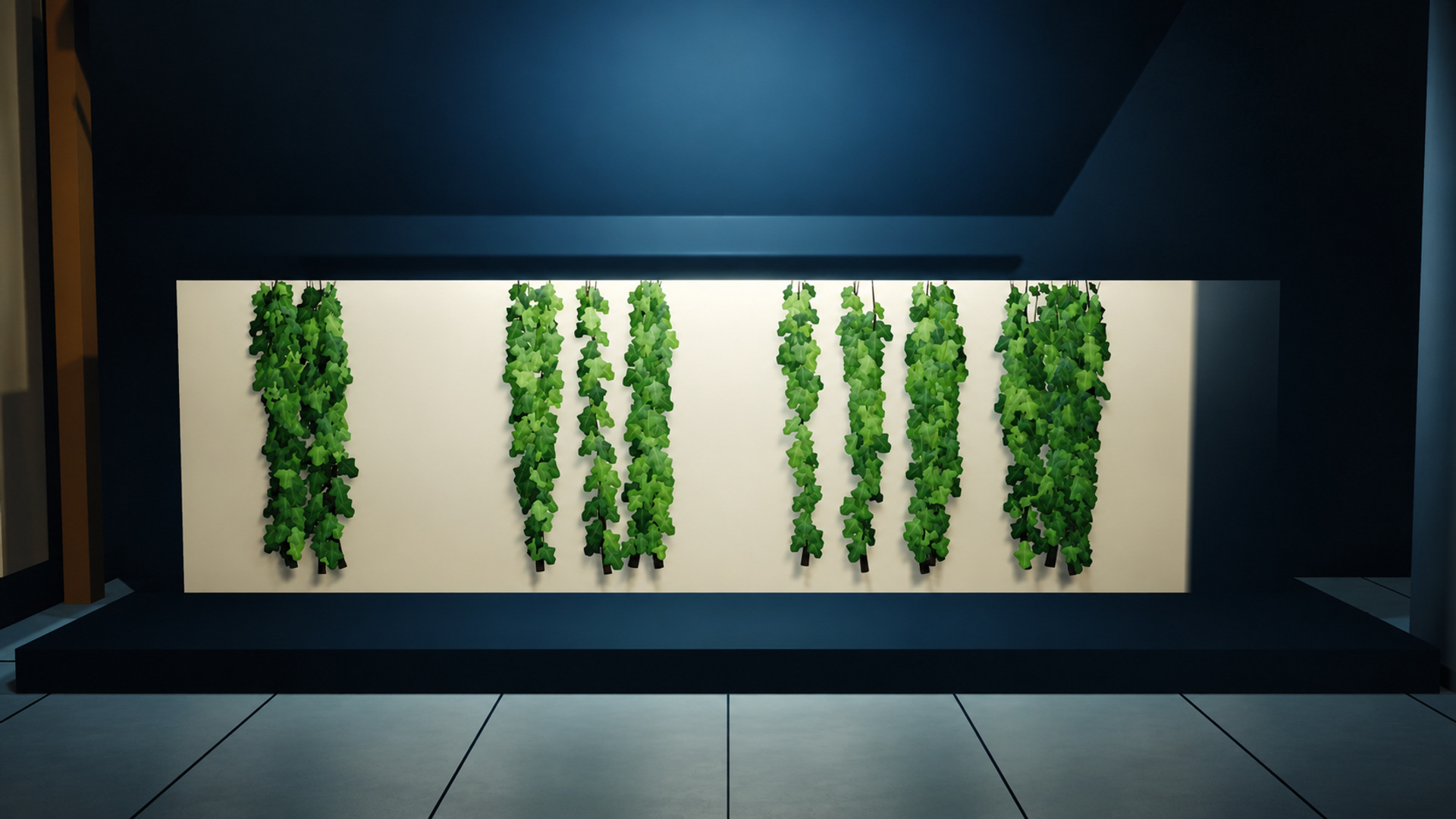
Select image to view full size.
Connect character climbing
Add the Vine Climb Component to a Character and bind grab, vertical and lateral movement, release and jump-off. Collision channels control which surfaces can be climbed.
Learn MoreRelated Products
More plugins from Athian Games.
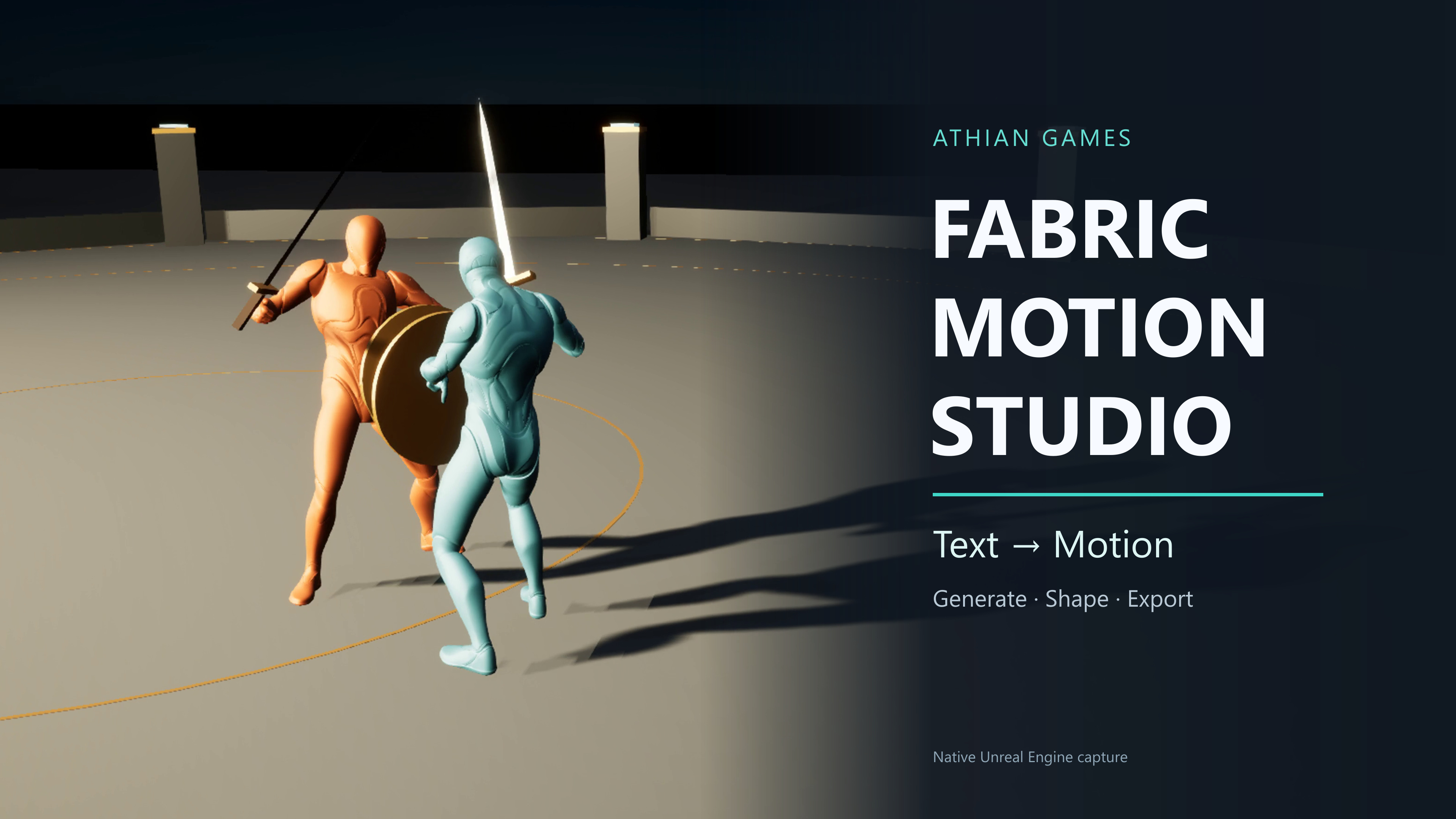
Fabric Motion Studio
Generate motion, shape trajectories and contacts, then export native animation sequences. Explore buffered runtime generation with an offline fallback in the example project.
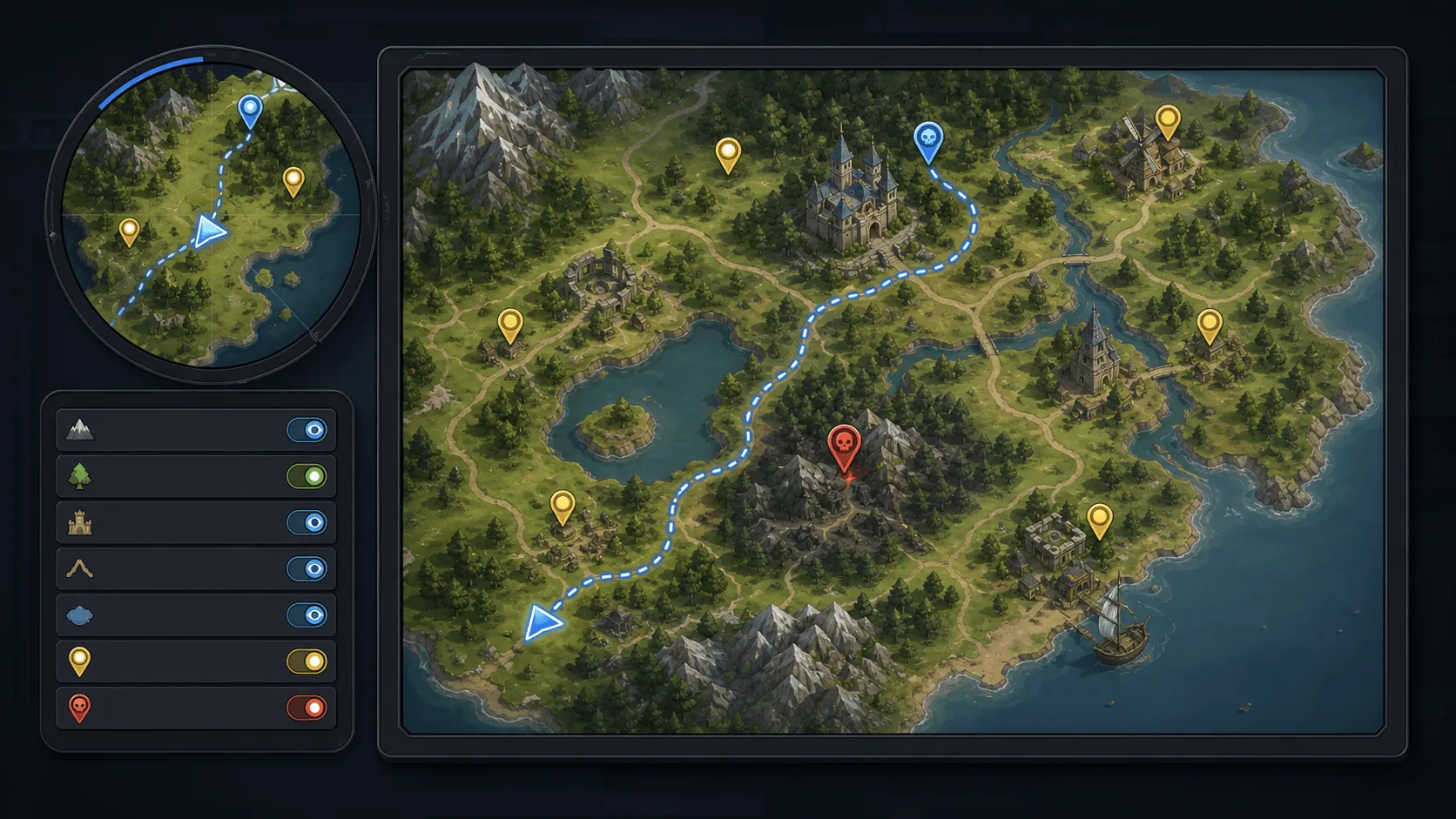
Minimap, Map and Navigation System
Build a fully customized and texture based Minimap, Map and Navigation System for your next big title.
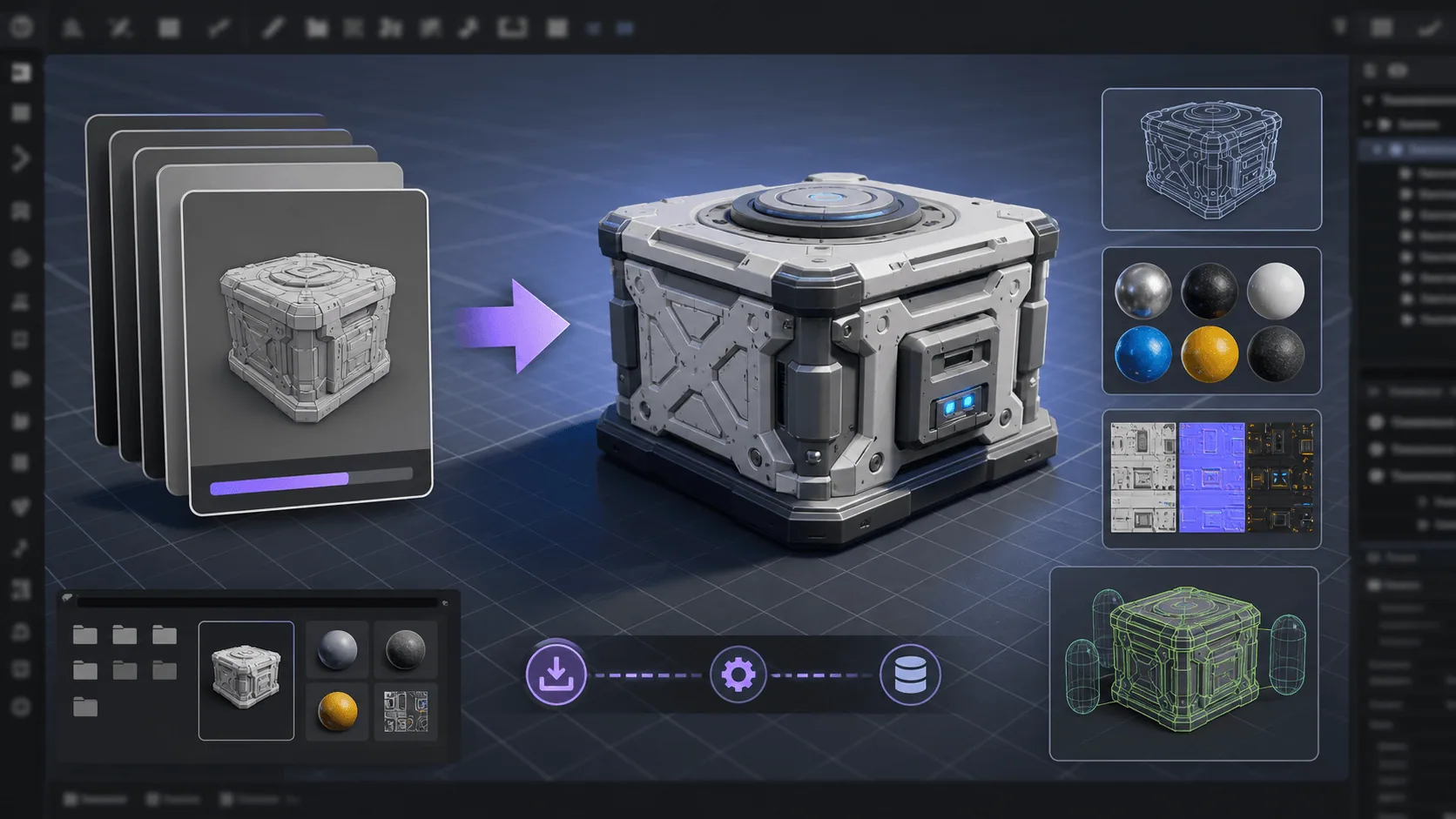
Runtime FBX Import for Unreal Engine
Asynchronously Import FBX files in your Unreal projects, in runtime
Need Help?
Our support team is here to help you get the most out of Procedural Vines. Whether you have technical questions, need integration assistance, or want to report an issue, we're ready to assist.